Churchill County Dog Registration Information
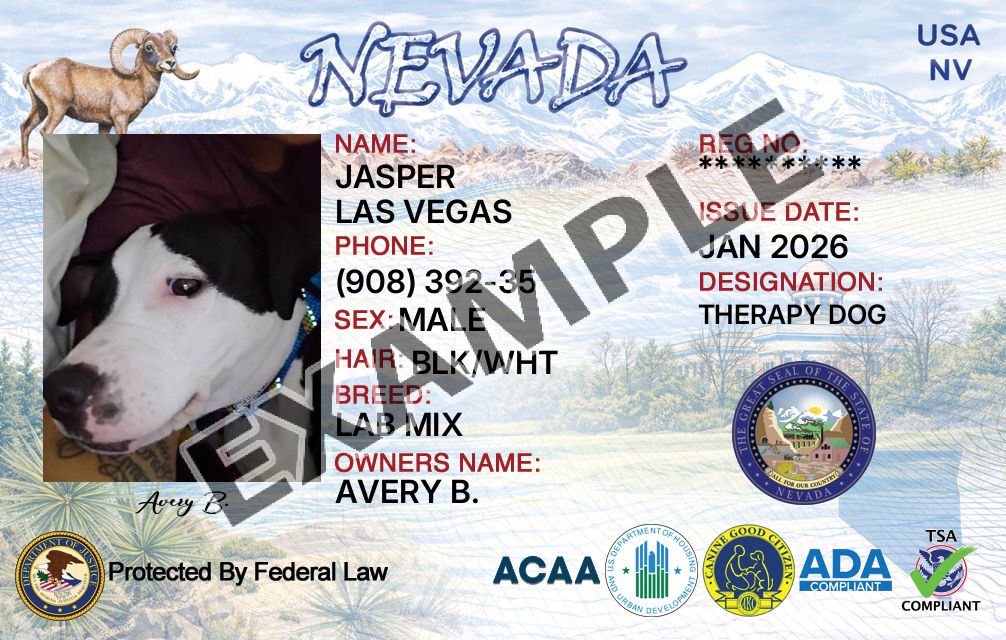
Service Dogs and Emotional Support Animals in Churchill, Nevada
If you’re asking, “where do I register my dog in Churchill County, Nevada for my service dog or emotional support dog”, the answer usually depends on where you live (City of Fallon vs. unincorporated Churchill County) and which local agency handles animal control and rabies enforcement for your area. In most cases, “registering” a dog means getting a dog license in Churchill County, Nevada (a local government license tied to rabies vaccination and identification), not obtaining a special state-issued “service dog” or “emotional support dog” registration.
Where to Register or License Your Dog in Churchill County, Nevada
Because licensing is often handled locally, here are example official offices within Churchill County, Nevada that may be involved in animal control dog license Churchill County, Nevada questions, rabies enforcement, bite reports, or local animal shelter/field services. If a detail (like hours) is not publicly listed in an official source, it is intentionally left blank.
Official offices (examples)
| Office | Address | Phone | Hours | |
|---|---|---|---|---|
| City of Fallon Animal Shelter / Animal Control (Rabies Control Authority contact) |
1255 Airport Rd Fallon, NV 89406 |
(775) 423-2282 | woof@cccomm.net | Not listed |
| City of Fallon Animal Shelter / Animal Control (alternate contact) |
1255 Airport Rd Fallon, NV 89406 |
(775) 423-4962 | woof@cccomm.net | Not listed |
| Churchill County Government (main county offices) | Not listed | Not listed | Not listed | Not listed |
Overview of Dog Licensing in Churchill County, Nevada
What “registering your dog” usually means
In everyday terms, people often say “register my dog” when they mean a local dog license. A dog license is a local permit issued by a city or county (or an agency working under local authority) that helps connect your dog to you and supports animal control services. This is separate from microchipping and separate from service dog or ESA status.
Most licensing is handled locally (city/county), not by the state
Nevada does not operate one universal statewide “dog registration” for service dogs or emotional support animals. Instead, dog licensing is typically handled locally. That’s why the best starting point for where to register a dog in Churchill County, Nevada is your local animal control or shelter office. If you live inside Fallon city limits, the City of Fallon is commonly the relevant local authority. If you live outside city limits, the county (or a county-designated animal control function) may apply.
Rabies vaccination is a core requirement tied to licensing and enforcement
In Nevada, rabies vaccination requirements are enforced through local rabies control authorities and animal control procedures. Generally, dog licensing programs require current proof of rabies vaccination because rabies is a public health issue and licensing is one way communities track compliance.
How Dog Licensing Works Locally in Churchill County, Nevada
Step 1: Determine your “local” jurisdiction (Fallon vs. unincorporated)
The first practical step is figuring out whether you are a City of Fallon resident or live in unincorporated Churchill County. Local rules can differ, and the issuing office for an animal control dog license Churchill County, Nevada may differ as well. If you’re unsure, provide your address when you call and ask which jurisdiction applies.
Step 2: Gather the documents most offices ask for
Licensing programs commonly require proof your dog is vaccinated against rabies and basic owner identification. If you are licensing a newly acquired dog or you just moved, offices may also ask for proof of residency.
- Current rabies vaccination certificate or veterinarian proof
- Owner identification (driver’s license or other ID)
- Proof of residency (may be requested for local licensing)
- Payment for the licensing fee (amount varies by local rules)
Step 3: Ask how renewals and rabies expiration affect your license
Many jurisdictions align the license term to the rabies vaccination expiration date, so your license may need renewal when rabies proof expires. When you contact the office, confirm:
- Whether your license expires annually or follows the rabies vaccination expiration date
- Whether licenses can be issued in person, by mail, or via local government processes
- Whether altered (spayed/neutered) vs. unaltered dogs have different fees (if applicable locally)
Step 4: Understand what licensing does (and doesn’t) do
A dog license is designed to help animal control return lost dogs faster, demonstrate rabies compliance, and fund local services. It is not a certification of training, temperament, or disability-related access rights. Even if your dog is a service dog or an emotional support animal, local licensing requirements may still apply.
Service Dog Laws in Churchill County, Nevada
Service dog legal status vs. a dog license
A service dog is generally defined (under federal disability law) as a dog that is individually trained to do work or perform tasks for a person with a disability. This legal status is about training and disability-related tasks, not about a local licensing receipt. A dog license in Churchill County, Nevada, by contrast, is a local government requirement focused on rabies compliance and identification.
No official “service dog registration” is required for public access
There is no universal government-issued service dog registration that you must buy to be “legitimate.” Be cautious of claims that you must purchase a certificate, ID card, or vest to make your dog a service dog. Those items can be optional tools, but they do not create legal service dog status on their own.
What a business may ask (and what they can’t)
In public settings, staff typically may ask limited questions to determine if a dog is a service animal (for example, whether the dog is required because of a disability and what work or task it has been trained to perform). They generally should not demand medical records, require demonstration of tasks, or require a special registry ID as a condition of entry. However, behavior standards still apply: service dogs must be under control and housebroken, and can be excluded if they are out of control or pose a direct threat.
Do service dogs still need local licensing?
Often, yes. Many communities still require a locally issued license for dogs residing in the jurisdiction, including service dogs. When you contact the local office listed above, ask directly whether service dogs are:
- Required to be licensed like any other dog
- Eligible for any fee reduction or exemption (only if the local ordinance provides it)
- Subject to the same rabies vaccination and tag requirements
Emotional Support Animal Rules in Churchill County, Nevada
ESA vs. service dog: the key difference
An emotional support animal (ESA) provides comfort or emotional benefit through its presence, but it is not trained to perform specific tasks that mitigate a disability in the way a service dog is. Because of that, ESAs generally do not have the same public-access rights as service dogs (for example, entering restaurants or stores where pets are not allowed).
ESAs and local dog licensing
An ESA is still a dog living in the community. In practice, that means local rules about rabies vaccination and a dog license in Churchill County, Nevada may still apply. If someone tells you that “ESA registration” replaces licensing, treat that as a red flag. Licensing is a local government function; ESA status is typically relevant in specific contexts (like certain housing situations), not as a substitute for local vaccination and licensing compliance.
ESAs in housing (general guidance)
In housing contexts, some rules may require landlords to make reasonable accommodations for assistance animals in certain circumstances, but that does not automatically:
- Override local vaccination requirements
- Eliminate the need to follow leash laws, nuisance rules, or bite reporting requirements
- Allow an animal that is aggressive or out of control to remain without addressing behavior and safety issues
If you’re seeking ESA-related accommodations, keep your documentation organized, but remember that local licensing is a separate matter handled through city/county channels.
Frequently Asked Questions
Often, yes. A service dog’s legal status is about disability-related task training, while local licensing is about community rules such as rabies compliance and identification. Call your local office and ask whether service dogs are licensed the same way, and whether any fee exemptions exist under local ordinance.
Start with the City of Fallon Animal Shelter / Animal Control office listed in the “Where to Register or License Your Dog” section. Tell them your address and ask whether you’re within city limits and what the current process is for licensing and renewal.
Usually, yes—an ESA is still a dog living in the community and may be subject to the same local licensing and rabies requirements. ESA status generally does not replace local licensing.
Requirements can vary by local jurisdiction, but commonly requested items include:
- Rabies vaccination proof (certificate from your veterinarian)
- Owner ID
- Proof of residency (sometimes)
- Payment for the licensing fee
No universal government-issued registry is required for a service dog’s public access rights. If you’re being told you must pay a third-party service to “register” your dog as a service animal, that is not the same as local licensing. For local compliance, focus on your dog’s rabies vaccination and the local dog license process.
Register A Dog In Other Nevada Counties
Select your county below to get started with your dog’s ID card. Requirements and license designs may vary by county, so choose your location to see the correct options and complete your pup’s registration.
- Carson City County Dog Registration
- Clark County Dog Registration
- Douglas County Dog Registration
- Elko County Dog Registration
- Esmeralda County Dog Registration
- Eureka County Dog Registration
- Humboldt County Dog Registration
- Lander County Dog Registration
- Lincoln County Dog Registration
- Lyon County Dog Registration
- Mineral County Dog Registration
- Nye County Dog Registration
- Pershing County Dog Registration
- Storey County Dog Registration
- Washoe County Dog Registration
- White Pine County Dog Registration